


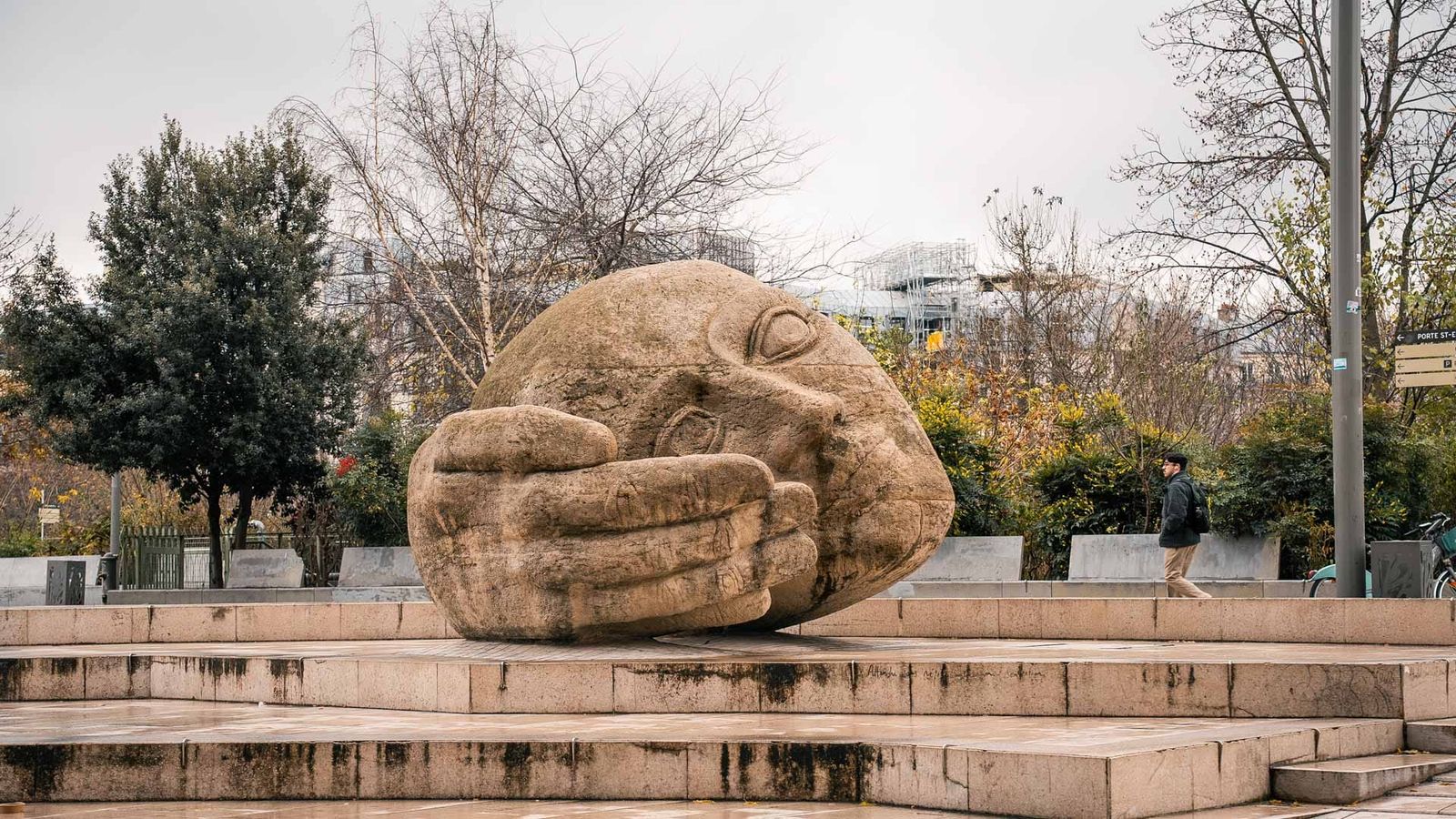
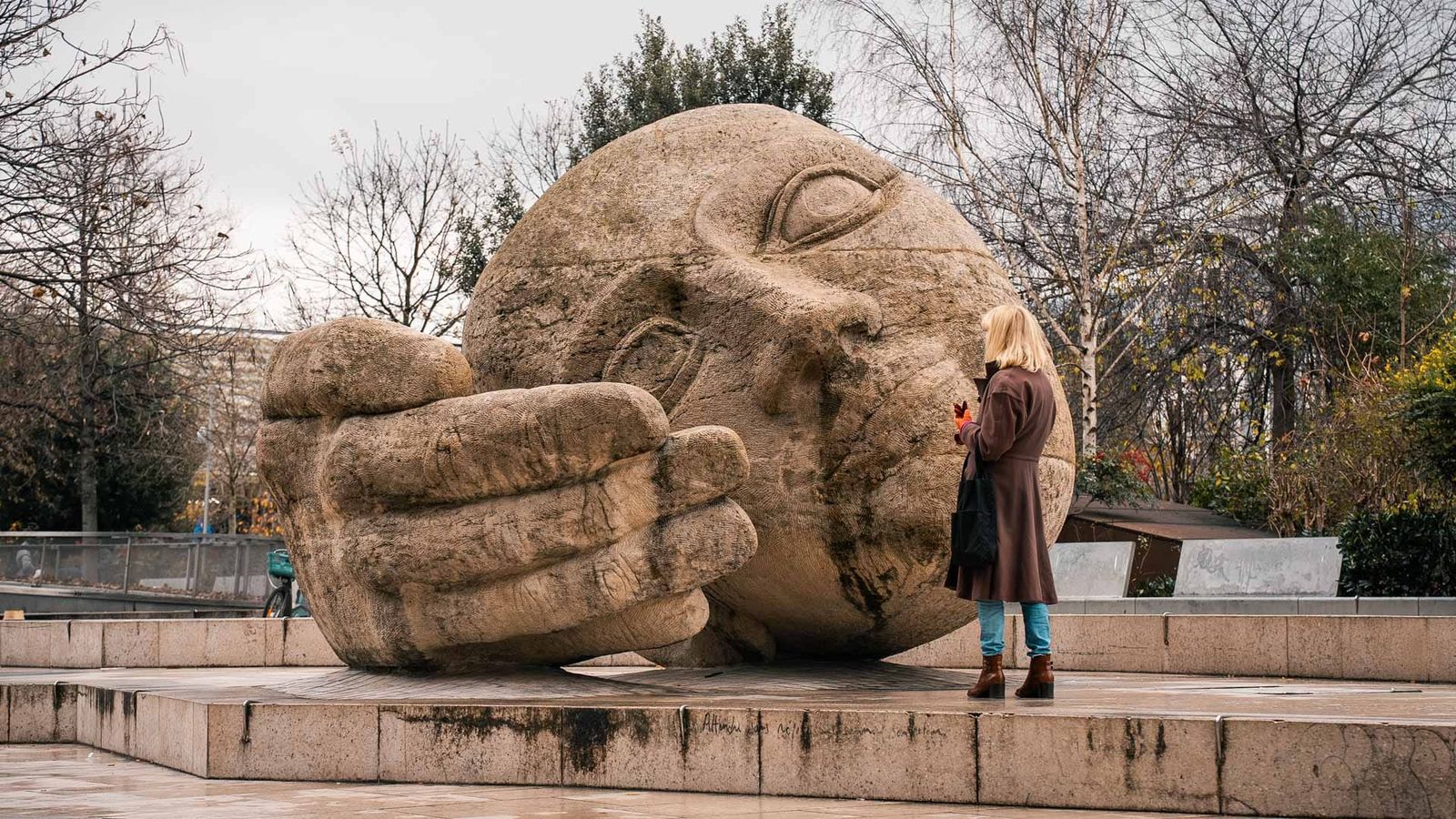
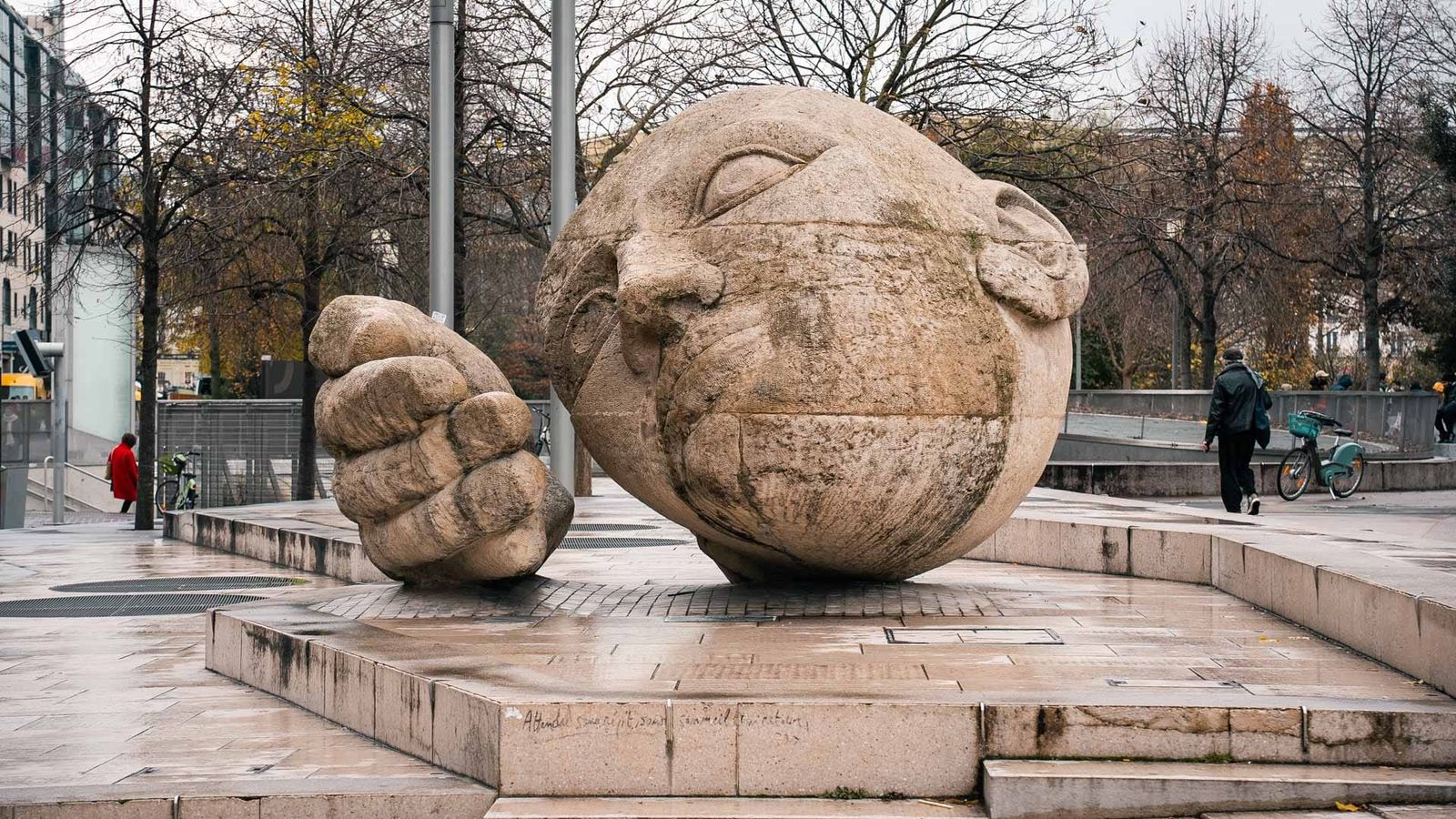
Écoute, a captivating sculpture by French artist Henri de Miller, is a remarkable piece situated in Jardin Nelson-Mandela (formerly Jardin des Halles) near the Church of Saint-Eustache. Created in 1986, this monumental work invites passersby to ponder the deeper connections between humanity and the echoes of life beneath our feet.
A Stone Head in Contemplation
The sculpture features a massive, stylized head of a man resting on his hand, symbolizing introspection and awareness. Measuring an impressive 65 tons and made of Burgundian sandstone, the head’s ovoid shape evokes the fragility and perfection of an egg, contrasting with its substantial weight.
The gentle curves of the face suggest a timelessness, while the lack of overt masculinity allows it to transcend gender, echoing ancient sculptures in its simplicity.
From Forum to Garden
Originally commissioned for the Forum des Halles in 1986, Écoute was placed in the René-Cassin Square as part of a public art initiative by the City of Paris.
The sculpture’s orientation was slightly altered following the garden’s renovation in 2013, which transformed the space into the Jardin Nelson-Mandela. The nearby sundial, also designed by de Miller, was removed during this redevelopment.
Echoes of Culture
The sculpture resonates not only with its physical presence but also through its representation in contemporary culture. Notably, a scene from Mathieu Kassovitz’s film “La Haine” features this artwork, linking it to the social narratives of urban life in Paris.
The head, seemingly listening to the murmurs of the city, serves as a focal point for visitors and a playground for children, embodying the spirit of curiosity and engagement.
A Symbol of Urban Harmony
Écoute stands as a testament to the harmony between art and the urban environment, inviting contemplation and interaction. As people gather around the sculpture, it becomes a part of their daily lives, encouraging them to pause, reflect, and connect with the vibrant energy of Paris.